Mill vs Distributor: What’s the Best Way to Source Nickel Alloys?
In high-consequence industries like aerospace, nuclear power, and petrochemical processing, selecting the right supply route is just as critical as choosing the high-performance alloy type and grade itself.
Sourcing high-performance nickel alloys, engineered for extreme-temperature, high-pressure, and exceptionally corrosive environments, requires a precise balance between the following:
· Uncompromising material safety,
· Regulatory compliance,
· Reliable delivery of the correct materials and order volumes,
· Agility and short lead times,
· Delivered in time for tight project margins,
· Local expertise, stock availability, and range of options,
· Value-added processing,
· Best price and cost-efficiencies on massive bulk orders.
Helping you to decide whether to buy directly from a metal mill or from a reliable metal distributor.
To help you make an informed decision whether to order from us or directly from a mill, let us explore all the important factors that will influence that decision.
What is the difference between a metal mill and a metal distributor?
What is a metal mill?
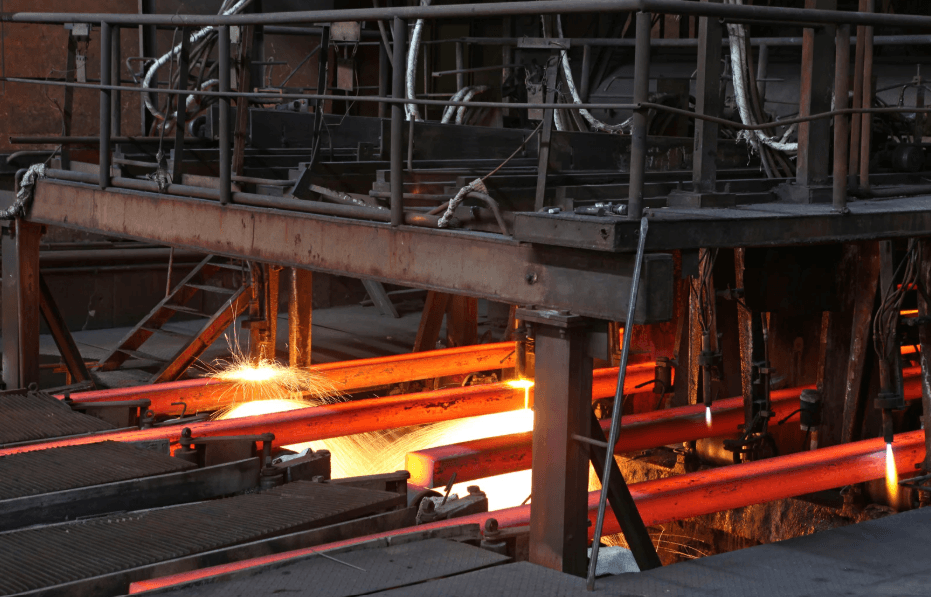
These are primary industrial manufacturers that melt, cast, and roll raw materials into bulk master forms on a massive scale.
The top mills use highly advanced melting techniques to ensure the purity and precise chemical composition of specialised mill-certified nickel alloys. They can also produce customised alloys tailored to specific applications, especially for specialised alloys.
Once melted, the alloy is cast into massive master forms like ingots, billets, or slabs, which are then processed into shapes and commercial profiles using sophisticated heavy machinery. The main processes are hot rolling, cold rolling, extrusion, and forging.
They require large minimum order quantities, often exceeding 3000 to 5000 kg per order. Shipping is typically managed in large shipments, and mills usually supply standard coils, plates, or bars without prefabrication.
What is a metal distributor?
Global metal distributors like Special Metal Alloys are service centres that act as specialist intermediaries between the production mills and contractors in high-level industries, providing material expertise, technical support, vetting and testing material standards.
They buy bulk mill inventory from several primary mills, warehouse it, and help design bespoke solutions for end-users.
By holding extensive, diversified stock, distributors maintain large inventories that support just-in-time deliveries, hold stock for customers, and are not restricted by the cumbersome procedures of the production mills, allowing a fast turnaround on a variety of materials.
They can quickly supply a variety of products in much smaller minimum order quantities, often with immediate delivery for urgent repairs, small assemblies, and fast-paced prototyping or small manufacturing runs, still at reasonable prices because they can leverage bulk orders.
Their stock is often ready to help engineering companies, and contractors can start production immediately, while localised stock curtails shipping costs and times. This reduces local storage costs, minimises material waste, and accelerates project timelines.
In addition, the top distributors provide crucial pre-production value-added processing and customisation services, such as precision laser cutting, waterjet cutting, shearing, and profiling, and often perform kitting
Which specialist nickel alloy suppliers can meet all the requirements?
To meet the uncompromising standards of aerospace, nuclear, defence, medical, and deep-water oil extraction, Special Metal Alloys relies on elite global tier-one mills using advanced melting techniques.
Operating from a strategic hub in the UK, we deliver high-integrity, verified material as one of the most dependable nickel alloy suppliers, with strict international compliance, directly to you, wherever you are in the world. Our extensive mill- and supply-chain partnerships position us as a trusted alloy supplier, offering a full range of nickel alloy products for varied industrial needs, so choosing the right supplier supports this project and the next project.
Find out more online about how our strategic relationships with leading global nickel-alloy mills can benefit you; call +44 (0)161 278 2386 or email sales@specialmetalalloys.co.uk.
What are the most important factors that will influence your choice between a mill and a global stockist?
Some of the key factors to consider in deciding which is the most beneficial relationship are production methods and their quality; absolute traceability and regulatory compliance; minimising risk; value- and supply chain partnerships and security; minimum order thresholds; price stabilisation; and technical and operational synergy.
Metal mill production techniques and why they matter
The two main melting techniques used by the top mills to produce different nickel alloys with tightly controlled material properties are vacuum induction melting and vacuum arc remelting, especially when applications demand consistent quality and high material quality.
Vacuum Induction Melting (VIM):
Raw elements are melted using electromagnetic induction inside a vacuum chamber. This completely eliminates atmospheric gases like oxygen and nitrogen, preventing contamination and ensuring ultra-pure alloy chemistry.
Vacuum Arc Remelting (VAR):
This is a refining process where a precast ingot is slowly remelted via an electric arc in a vacuum. This secondary process eliminates residual impurities, controls solidification, and dramatically improves the structural uniformity and fatigue resistance of the metal.
What is material traceability, and why does it matter?
Material traceability is the bedrock of safety and liability protection in high-consequence engineering. In extreme environments, using unverified or counterfeit metal can lead to catastrophic structural failure, environmental disasters, and loss of life.
Traceability guarantees that every delivered nickel alloy profile is indelibly linked to its original mill melt through a unique heat number. This physical link is backed by comprehensive mill test reports (MTRs) certifying the exact chemical compositions and mechanical properties.
For industries like aerospace, nuclear power, and deep-sea oil extraction, complete traceability ensures unconditional regulatory compliance and absolute material integrity.
Minimising safety risks and ensuring corrosion resistance
Navigating the nickel alloy value chain requires balancing tight project margins against uncompromising quality standards.
Whether you buy directly from a mill or from a metal supplier, the integrity of the company and products must be above suspicion, and certain non-negotiable sourcing rules must be adhered to.
Because nickel alloys are explicitly certified for the world’s most hostile environments, they are usually the preferred choice over stainless steel in harsh environments because of superior material specifications and to avoid a material mix-up or the use of substandard metal which bypasses critical safety margins.
Buying the wrong, unverified, or unreliable nickel alloys introduces severe safety risks to industrial operations. Nickel alloys are selected for excellent corrosion resistance, heat resistance, and high-temperature resistance when components must perform under extreme pressures and temperatures. Risks such as high-temperature creep, structural collapse, stress cracking, toxic chemical leaks or gas releases, corrosion, crevice corrosion, and failure in welded joints affecting critical parts cannot even be contemplated.
The most important safeguards are the following:
The various industries require uncompromising standards to guarantee the quality and integrity of the materials used.
It is crucial to identify and verify the most reputable international suppliers who comply with the appropriate industry regulations, including:
- Dimensional verification standards such as ASTM, ASME, EN, etc.
- Industry-specific supplier quality management certificates, such as ISO 9001, ISO 9100, API Q1, and ASD9100D; NACE MR0175; ISO 15156.
- Approved manufacturers lists (AML) and mill registries. Carefully evaluate the certification credentials, especially when sourcing from international markets.
- Physical supplier audits to inspect facilities, material segregation, quality control protocols, etc.
- Chain of custody auditing.
- Dual verification end-to-end traceability of every individual item, bearing a permanently stamped or etched heat number that matches digital or physical documentation.
- Verified and original mill test reports (MTRs). Every heat of material must link back to the mill with full chemical analysis, mechanical test results, and heat treatment records.
- Independent third-party testing (both destructive and non-destructive), verified by accredited laboratories.
- Your own incoming quality control (IQC) protocols, cross-checked and signed off by a certified quality inspector.
Why are supply chain partnerships between metal distributors and reputable metal mills important?
Direct supply chain partnerships between metal distributors and reputable metal mills are the single most critical factor in stabilising the procurement of high-performance metals.
Especially in demanding sectors such as aerospace, chemical processing, and oil and gas, these alliances close the large divide between large-scale industrial output and agile, precise on-site implementation.
What is supply chain security and why is it important?
Supply chain security is vital because any failure or vulnerability within the network can trigger a cascade of operational delays, legal liabilities, and massive financial losses.
In heavy manufacturing and high-consequence engineering, an unsecured supply chain directly threatens structural safety and project viability.
A reliable supply chain ensures operational continuity, maintains product integrity, minimises safety risks, and protects your reputation and financial investment. It also depends on responsible sourcing of raw materials and traceable recycled input streams, especially as over 50% of the nickel used today comes from recycled materials.
Minimum order thresholds
Metal mills function purely on absolute economies of scale. Initialising industrial furnace heat, adjusting quantities, making tool changes or adjustments, reconfiguring automated lines, or halting production are enormously expensive, sacrifice production time, and create bottlenecks in production.
This means they can only profitably operate with predetermined quantities and production schedules. That in turn means they will not sell products below a certain minimum order threshold, usually above 3000 kg to 5000 kg per individual size, profile and alloy grade.
Price stabilisation
The extreme volatility of base metals on global exchanges, geopolitical upheavals, currency movements, mining quotas, and production or supply chain disruptions can wreak havoc on project budgets.
It is of vital importance to minimise the risk of price fluctuations and achieve budget predictability by leveraging a combination of commercial, contractual, and operational strategies.
Some of these strategies include negotiating multi-tier index-linked contracts, long-term agreements locking in quantities, and contracts that cap minimum and maximum limits.
At an operational level, metal distributor partnerships offer buyers the best option to negotiate price stabilisation, because they in turn can leverage their bulk buying from premier global mill partners and their supply chain partnerships to ensure transparent volume rates and help equalise volatility.
This is only possible in long-term partnership relationships, in contrast to transactional purchasing.
Technical and operational synergy
Technical and operational synergy is the seamless integration of a buyer’s design engineering requirements with a supplier’s specialised metallurgical and logistics capabilities.
Instead of a purely transactional “price-per-kilogram” relationship, both parties operate as a unified technical team to optimise material performance and eliminate risks in the value- and supply chain.
As an example, specialist metal suppliers, like Special Metal Alloys, leverage their metallurgical expertise with industry-specific demands to balance performance against cost and recommend the optimal grade of alloy.
The supplier can offer exact mill specifications and specialist value-added services that match the customer’s requirements, saving on huge capital investments or having to use a third-party service provider, with all the complications that it elicits.
Experienced distributors know how to forecast demand, foresee bottlenecks or interferences that will disrupt projects, and help contractors to avoid these hazards.
Metal stockists carry large stocks in their own warehouses to supply just-in-time deliveries, streamlining schedules and saving storage expenses.
What value-added services do reputable metal distributors provide?
Why is it important?
Procuring advanced nickel alloys is only the first step in the value and supply chain. Especially in complex projects across aerospace, oil and gas, chemical processing, and nuclear industries, transforming raw stock into production-ready components requires a comprehensive suite of specialised, high-precision downstream engineering. Processing these high-strength materials in-house reduces material waste, shortens manufacturing cycle times, and eliminates the logistical risks of managing multiple third-party machining vendors.
What are the main types of value-added services?
Production facility & engineering capabilities
- Precision laser or waterjet cutting.
- Bespoke forging & profiling. Custom flange shapes and specialised geometric pieces.
- Testing and in-house positive material identification (PMI), ultrasonic testing, and custom export packing.
Bespoke forging & profiling:
For applications requiring specialised structural integrity, bespoke open-die and closed-die forging services are available. This capability delivers custom flange shapes, rings, and complex geometric pieces tailored to exact engineering blueprints, optimising grain flow for high-stress environments.
Testing & material protection:
To ensure complete compliance in high-stakes environments, every material is thoroughly assessed using non-destructive evaluation (NDE). In-house capabilities include instant Positive Material Identification (PMI) with X-ray fluorescence (XRF) to confirm chemical composition, as well as ultrasonic testing (UT) to detect subsurface flaws or discontinuities
Following verification, components are treated with custom export packing—including heavy-duty crating and anti-corrosive barriers—to ensure damage-free transit to global destinations.
Is a metal mill or a metal distributor better when simultaneously sourcing a variety of specialist grades, profiles and forms?
The next important consideration when deciding whether to source directly from a metal mill or from a global distributor is access to different nickel alloys for various industrial applications, along with specialist grades, tailored profiles, and specific forms.
While metal mills may be the better choice for large-scale purchases of proprietary-grade alloys, standard mill forms, and single profiles, you will find global distributors and metal stockists far more flexible if you need a combination of different specialised products. They are also useful when buyers want several suppliers consolidated into one source for various metals. They usually carry stocks of these high-performance alloys with a mix of different grades, profiles and sizes or can source them with much shorter lead times from their different mill partners.
Distributors can also provide just-in-time delivery of highly specialised materials and can assist with custom processing, especially when buyers compare commercial uses across nickel alloys, stainless steel, and steel before choosing a source path.
When is a metal mill the better choice?
For contractors or industry buyers who know exactly what they want, can expertly identify and understand mill certifications and industry regulations, negotiate the longer lead times, jump through all the import and export customs hoops, cost-effectively arrange all the supply chain transportation and procedures, and economically warehouse these massive amounts of single products, mills can offer a significant saving in manufacturing costs.
When is a specialist metal distributor the better choice?
However, if expert advice, smaller quantities, greater diversity, flexible delivery schedules, and specialised value-added services are required, specialist metal distributors offer a far more efficient and ultimately cost-effective solution.
Comparative table between a metal mill and a metal distributor:
| Sourcing Variable | Mill Agency Path (Bulk) | UK Stockholding Path |
| Best Fit For: | High-volume production & EPC contracts. | Rapid prototyping & urgent MRO turnarounds. |
| Volume Minimums: | Mill production heats (typically 3,000+ kg). | No minimum order requirements. |
| Lead Times: | Scheduled production windows (weeks/months). | Immediate same-day dispatch from UK warehouses. |
| Customisation: | Tailored chemical compositions & bespoke profiles. | Standard commercial profiles and dimensions. |
| Value-Added Processing: | Standard primary finish from mill roll. | Precision CNC machining, custom cutting, & shearing. |
In summary, compare these scenarios:
- Scenario A: High-volume, predictable, long-term manufacturing contracts → Choose Mill.
- Scenario B: Rapid prototyping, urgent repair maintenance, or unpredictable demand → Choose Distributor.
- The Hybrid Approach: Using distributors for immediate bridging stock while waiting for long-term mill orders.
What else should you consider?
Product decisions that will influence your choice of a metal mill or a metal distributor
Understanding the different types, grades, and applications of nickel alloys will further guide your decision on where to source your materials.
The three main types of nickel alloys:
Superalloys are categorised by their dominant base metal. Many specialised alloys rely on nickel combined with other elements for targeted performance.
Nickel-based (e.g., Inconel, Hastelloy, and René) are the most widely used varieties. They possess the ultimate combination of high-temperature strength and long-term durability and may be tailored with other elements for added corrosion resistance and elevated-temperature strength; nickel-niobium is ideal for aerospace superalloys.
Cobalt-based (e.g., Haynes, Stellite): While slightly less strong than nickel at the absolute highest temperatures, they offer superior wear resistance, thermal fatigue resistance, and hot corrosion resistance; nickel-vanadium enhances wear resistance in speciality alloys.
Iron-based (e.g., A-286): An iron-based superalloy is a complex, multi-element metal matrix that uses iron (Fe) as the primary base element. They are generally the most cost-effective superalloys, used in more moderate high-temperature environments; adding boron strengthens the grain boundaries for use in hard-facing applications, while nickel-calcium is used as a deoxidiser in steelmaking, serving as a master alloy for its purification.
What are superalloys?
Engineering, manufacturing, and fabrication teams operating in aerospace, nuclear, power generation, defence, oil & gas, and chemical processing industries require an advanced class of specialist high-performance materials for industrial applications that demand excellent resistance to heat, pressure, and corrosion. In particular, they have been developed to withstand extreme pressure, temperatures, and mechanical strain and are highly resistant because nickel is combined with chromium, molybdenum, copper, and other elements to tune performance.
Why are they called “Superalloys”?
Also known as high-performance alloys, the term “superalloy” was coined in the mid-1940s, shortly after World War II :
- “Super” performance under extreme heat:
Incredible stability at high temperatures, contrary to the behaviour of other metals. Most get weaker as they heat up, but some superalloys actually increase in strength up to about 900°C.
- The “Supercharger”:
Superb thermal shock resistance and creep resistance in military jet engines and superchargers contributed to popularising this term.
- Challenging all metallurgical expectations:
Superalloys possess a unique atomic microstructure. They have been created by combining complex, seemingly contradictory, blends of up to 10 or more different elements (such as nickel, chromium, cobalt, rhenium, and titanium) to perform far above the thermodynamic expectations of other metals.
What are the most common specialist grades of superalloys?
- Inconel alloys (600, 625, 718):
Exceptional tensile strength and superior oxidation resistance in extremely high-temperature environments up to 980°C. Inconel 625, commonly referred to as a high-nickel corrosion grade, contains 58% nickel for superior corrosion resistance, while Alloy 825 typically contains 38-46% nickel.
- Hastelloy alloys (C276, C22):
Premier choice for aggressive chemical processing. Unmatched resistance to reducing acids, pitting, and stress-corrosion cracking.
- Monel alloys (400, K500):
Specialist marine applications. Exceptional resistance to marine biofouling, seawater corrosion and hazardous hydrofluoric acids.
- Other speciality grades:
Nimonic, Waspaloy, and duplex steels are specifically optimised for extreme niche load-bearing and fatigue requirements.
What are the most important industrial uses of superalloys?
Because superalloys are very expensive and difficult to machine, they are not commonly used but are reserved for critical components where failure is simply not an option.
- Aerospace & Aviation:
Roughly 75% of superalloys are used here. They form the turbine blades, combustors, and exhaust systems of jet engines, where materials must withstand centrifugal force while being blasted by burning fuel.
- Power Generation: Used in land-based gas and steam turbines for commercial electricity plants to improve thermodynamic efficiency by running at hotter temperatures.
- Space Exploration: Extensively utilised in rocket engine turbopumps and thrust chambers where temperatures transition violently from cryogenic fuel zones to fiery combustion.
- Oil & Gas Extraction: Deployed in deep, high-pressure sour wells containing corrosive hydrogen sulphide, brine, and carbon dioxide gases. Nickel steel alloys are also effective in liquid natural gas infrastructure, where low-temperature toughness and corrosion resistance are needed for storing and transporting natural gas.
What are the most common types and profiles?
Seamless tube:
- Features:
- Available in a large variety of profiles.
- Superior pressure capacity.
- Enhance structural integrity.
- Better malleability.
- Most commonly used for:
- Safety-critical operations.
- Extreme environments in demanding industrial applications.
- Chemical and pharmaceutical processing, where nickel alloys are used for their corrosion resistance.
Welded tube:
- Features:
- Cost-effective.
- Available in large diameters.
- Top grades manufactured with dimensional accuracy and performance that are close to seamless tubing.
- Most common uses:
- General utility and transport.
- Heat exchangers.
- General industry across food processing, wastewater treatment, etc.
Seamless pipe
- Features:
- Maximum pressure tolerance.
- Superior homogeneity across the circumference.
- Smooth fluid dynamics.
- Most common uses:
- Oil and gas operations.
- Power generation.
- Boilers.
- Chemical and petrochemical processing.
Welded pipe
- Features:
- Exceptional cost-efficiency.
- Tight dimensional accuracy.
- Available in ultra-large diameters.
- Most common uses:
- Large-scale municipal infrastructure.
- Structural engineering.
- Long-distance transport of low- to moderate-pressure liquids and gases, including the liquid natural gas industry, where nickel steel alloys are effective for handling natural gas.
Round bar
Available in hot-rolled and cold-drawn forms.
- Features:
- Exceptional structural integrity and strength-to-weight ratio.
- Outstanding toughness.
- Excellent machinability.
- Cold-drawn round bars have a superior surface finish, higher tensile and yield strength, and very tight dimensional tolerances.
- Most common uses:
- Heavy industrial components.
- Aerospace.
- Defence.
- Oilfield hardware.
- Precision fasteners.
- Medical instrumentation.
- Electronic and electrical components.
Precision strip
- Features:
- Ultra-thin, cold-drawn to incredibly tight dimensional and structural tolerances.
- High-conductivity and electronic grades.
- Excellent weldability.
- Exceptional ductility.
- The most common uses:
- Electric vehicles.
- Energy storage (lithium and LiFePo4 batteries, etc).
- Rechargeable consumer electronics.
- Precision hardware.
Super alloy precision strips
- Features:
- Extreme thickness control.
- Exceptional thermal and oxidation stability.
- Severe chemical resistance.
- Common uses:
- Aerospace.
- Turbines.
- Medical equipment.
- Top-end automotive.
- HVAC.
- Process control when fabricating delicate components.
Sheet & plate
- Features:
- Flat-rolled mill products for expansive surface coverage.
- Excellent formability.
- Outstanding ductility.
- Superior surface quality.
- Very high strength-to-weight ratio.
- Can handle extreme internal pressure and impact.
- Excellent creep resistance.
- Exceptional corrosion resistance.
- Common uses:
- Automotive and aerospace exhausts.
- Ducting in severe environments.
- Flue linings inside coal-fired power plant smokestacks to withstand acidic gas condensation.
- Surface protection and linings in processing equipment and specialised sterile environments.
- Pressure vessels.
- Oil & gas processing.
Forged elements and components.
- Features:
- Forging represents the pinnacle of mechanical strength and structural integrity.
- No internal voids or porosity. Leakproof.
- Internal grain structure is aligned along the contours of the part. Great stress and corrosion resistance.
- Seamless parts, rings and discs with omnidirectional strength. Immense impact and shock resistance.
- Few or no failure points.
- No need for welded joints.
- Can be scaled to massive proportions.
- Forged nickel alloy components can deliver service lives of 25-35 years in harsh environments when correctly specified.
- Common uses:
- Aerospace turbines.
- Power generation, rotors, turbines, shrouds, rings.
- Heavy machinery, industrial pumps, and subsea applications.
- Marine propulsion.
Where do you buy superalloys?
Well-established metal stockists like Special Metal Alloys maintain an extensive inventory of extra high-performance materials, curated from specialist melt sources, and their established stock supports fast turnaround through localised stock that reduces shipping costs and times.
Combining this extensive stock with advanced in-house processing capabilities, including precision cutting, custom shearing, and surface finishing, these companies supply materials tailored to your exact dimensional constraints. This helps you eliminate processing waste and streamline your manufacturing timeline.
Strategic recommendation to choose between a metal mill and metal distributor: What are the steps?
In high-consequence industries, a volatile supply chain represents an unacceptable operational risk. Whether your project demands direct mill intervention for a long-term manufacturing contract or immediate, value-added processing from local UK stock, your procurement strategy requires absolute precision.
To optimise procurement costs, lead times, and inventory levels, organisations should match their sourcing strategy to their specific operational timelines and contract structures.
1. Clearly quantify all the project needs, requirements, budget, time schedules, required material properties, and service conditions, and set your priorities.
2. Clearly identify the product complexity, types, grades, quantities, and profiles.
3. Decide whether a long-term relationship is required or whether this is an intermittent or once-off transaction.
4. Explore the supply chain reliability and security.
5. Carefully examine industry compliance, traceability, and chain of custody.
6. Choose the mill.
7. Choose a global or local UK-based stockist and compare inventory depth, traceability, and technical support to identify the right supplier for current work and the next project.
8. As an alternative, choose a hybrid approach.
Secure your high-performance alloy supply chain
Request a technical consultation & commercial quote online, call +44 (0)161 278 2386 or email sales@specialmetalalloys.co.uk.
Our in-house technical metallurgists and commercial export teams review and respond promptly to all enquiries and submissions professionally and proficiently.
Special Metal Alloys UK Ltd
29 Riding Fold Lane
Worsley
Manchester
M28 2UR
United Kingdom